Infrastructure Inspection & Asset Intelligence
Integrated field assessments, advanced on-track technologies, and engineered data analytics that establish an accurate condition, performance, and risk profile of rail assets across the full engineering value chain.
Accurate Condition Intelligence Across the Full Engineering Value Chain
Globtek Rail provides integrated infrastructure inspection and asset intelligence services that combine field assessments, advanced on-track technologies, and engineered data analytics to establish an accurate condition, performance, and risk profile of rail assets.
We assess rail assets across the full engineering value chain, ensuring that decisions related to operations, maintenance, and investment are informed by accurate, defensible information — from track geometry and rail integrity to civil structures, electrification, and signalling systems.
Structured Inspection Across Six Engineering Systems
Structured inspections across track, civil, electrification, signalling, and telecommunications systems provide a system-level evaluation of asset condition, component performance, and operational interfaces.
Permanent Way & Track
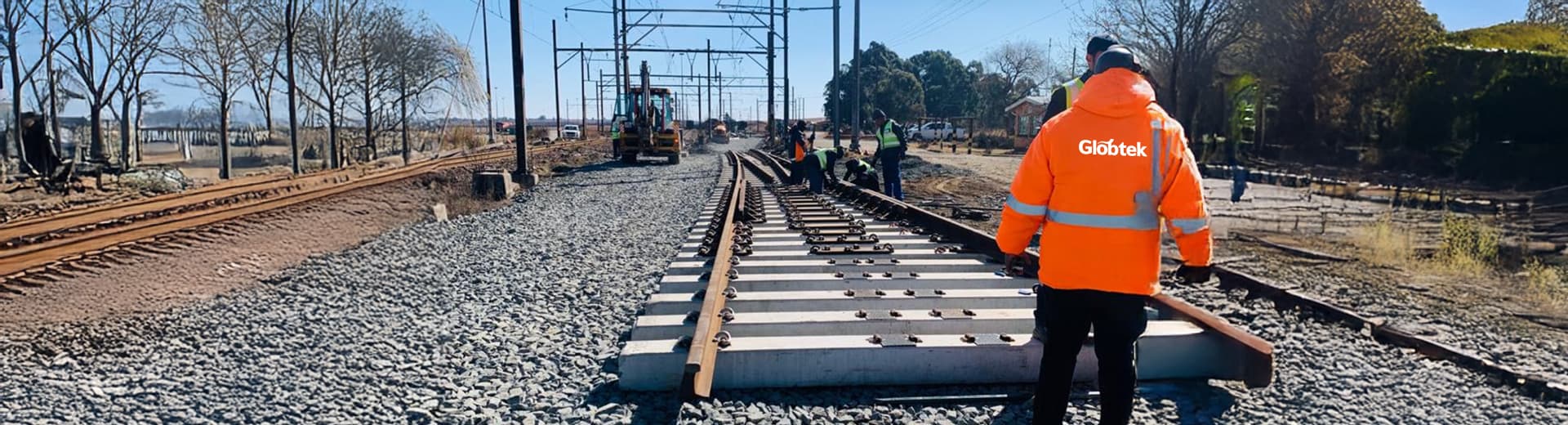
Rails, sleepers, fastenings, ballast, geometry, alignment, and formation — assessed for condition, compliance, and operational performance.
Civil & Structural Infrastructure
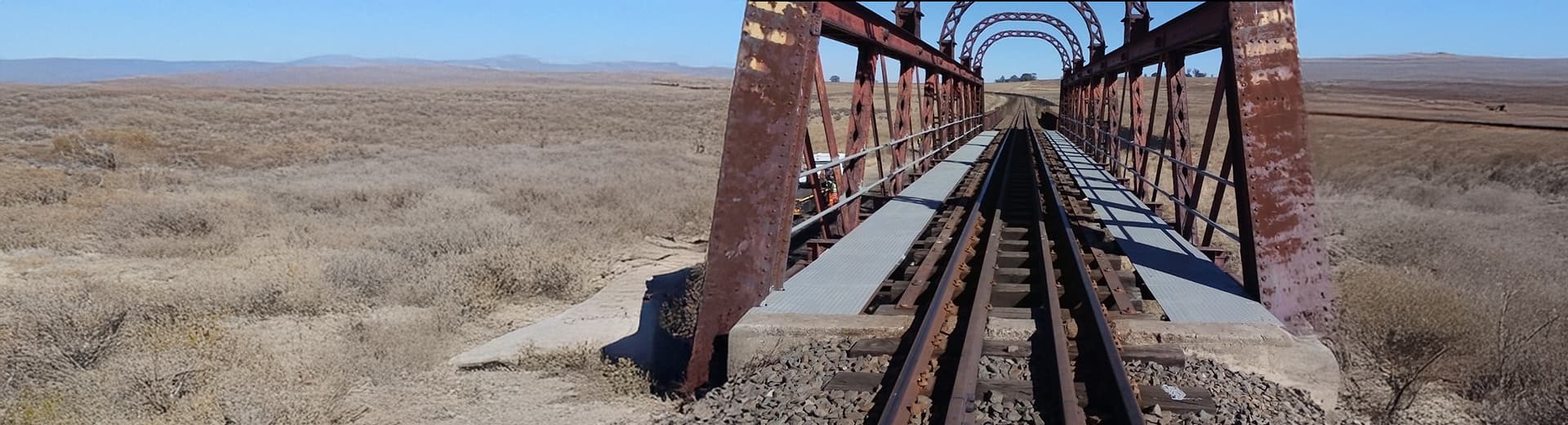
Bridges, culverts, retaining structures, embankments, cuttings, drainage systems, and level crossings evaluated for structural integrity and serviceability.
Overhead Traction & Electrification
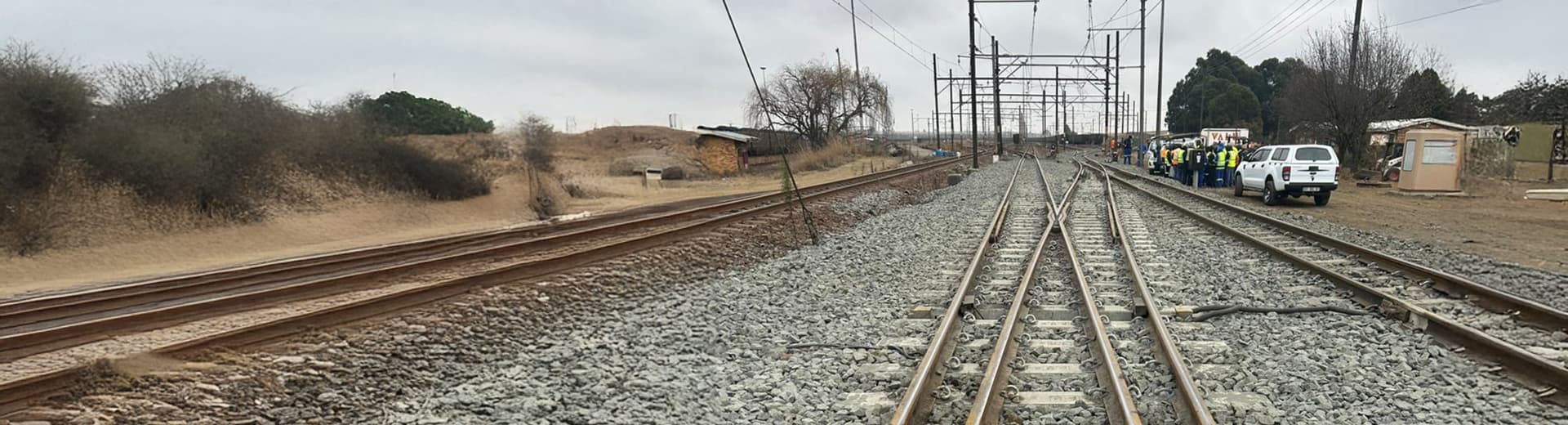
OHTE and OTE systems including catenary, contact wire, support structures, and earthing — inspected for condition, clearance, and interface compliance.
Signalling Systems
Trackside signalling equipment, interlockings, detector loops, and control interfaces assessed for condition, operational integrity, and compliance.
Telecommunications & Operations
Telecoms infrastructure, cabling, communication systems, and operational installations reviewed for condition, coverage, and operational interface performance.
Ancillary & Safety-Critical Assets
Safety-critical infrastructure including fencing, access points, warning systems, and ancillary assets assessed for compliance and operational risk.
This integrated approach ensures that defects are assessed not only at component level, but also in terms of system interactions and operational impact — providing a true picture of infrastructure risk across interconnected systems.
Five Specialised Inspection Methods
Each inspection methodology is selected and deployed based on the asset type, operational context, and level of detail required — from baseline visual assessments through to subsurface machine-based diagnostics.
Visual Infrastructure Inspections
Visual inspections deliver baseline condition intelligence through systematic assessment of structural components, track elements, and operational installations. They enable early identification of deterioration and risk and establish the baseline for further investigation, monitoring, and intervention planning.
- Assessment of rails, sleepers, fastenings, and ballast condition
- Identification of geometry irregularities, settlement, and visible wear
- Inspection of drainage systems, embankments, structures, and interfaces
- Review of OHTE, signalling, and telecommunications installations
- Documentation using geo-referenced photography and defect registers
- Systematic field assessment
- Geo-referenced photography
- Defect register documentation
- Condition baseline establishment
From Raw Inspection Data to Engineering Intelligence
Inspection datasets undergo structured validation, integration, and analytics processes to produce condition scoring, trend analysis, risk identification, and Remaining Useful Life modelling.
All outputs are presented in structured, decision-ready formats suitable for executive reporting, technical planning, and integration with asset management systems — ensuring that engineering intelligence reaches the right people in the right format.
Discuss Your Data NeedsData Validation & Cleansing
Inspection datasets are validated, cleansed, and prepared for integration — removing anomalies and ensuring data integrity before analysis.
Multi-Source Integration
OTM, GPR, ultrasonic, trolley, and visual inspection data are integrated into a unified, spatially-referenced asset condition picture.
Condition Scoring & Benchmarking
Assets are scored against condition standards and benchmarked to identify relative performance across the network and prioritise interventions.
Remaining Useful Life Modelling
RUL assessments quantify the expected life of assets under current operating conditions, informing renewal planning and capital investment decisions.
Risk & Deterioration Analysis
Trend analysis identifies deterioration patterns and emerging risks — transforming historical inspection data into forward-looking operational intelligence.
Decision-Ready Reporting
Outputs are structured for executive, technical, and planning audiences — ensuring that asset intelligence drives informed decisions at every level.
Structured, Decision-Ready Outputs
All inspection and analytics outputs are structured to suit the audience and purpose — from executive summaries and technical reports through to asset management system inputs and investment-grade condition assessments.
Condition Assessment Reports
Comprehensive technical documentation of asset condition across all inspected systems, with defect registers, geo-referenced photography, and engineering commentary.
Asset Condition Scoring
Structured condition scores and benchmarking data enabling rapid comparison across assets, corridors, and time periods to prioritise maintenance and renewal investment.
Remaining Useful Life Models
RUL assessments quantifying expected asset life under current operating conditions — directly informing renewal planning, CAPEX prioritisation, and investment cases.
Risk & Trend Analysis
Identification of deterioration patterns, emerging risks, and system-level interactions — turning historical inspection data into forward-looking operational and maintenance intelligence.
Executive & Management Reports
Decision-ready executive summaries structured for asset owners and senior management, presenting key findings, risk priorities, and recommended actions clearly.
Asset Management System Inputs
Structured data outputs formatted for integration with asset management platforms — ensuring inspection intelligence is captured, tracked, and accessible for ongoing planning.
What Integrated Inspection Intelligence Delivers
The integrated inspection and analytics framework enhances visibility of asset condition, supports evidence-based maintenance, prioritises interventions, reduces operational disruptions, and optimises lifecycle performance.
- Gain clear visibility of asset condition and risk across all systems
- Support data-driven operational and maintenance decisions with defensible evidence
- Prioritise interventions based on condition, criticality, and remaining useful life
- Reduce unplanned failures and operational disruptions through early risk detection
- Optimise long-term asset performance and lifecycle cost
Know the Condition of
Every Asset on Your Network
Our inspection and asset intelligence team is ready to help you build an accurate, defensible picture of your infrastructure and translate it into better decisions.